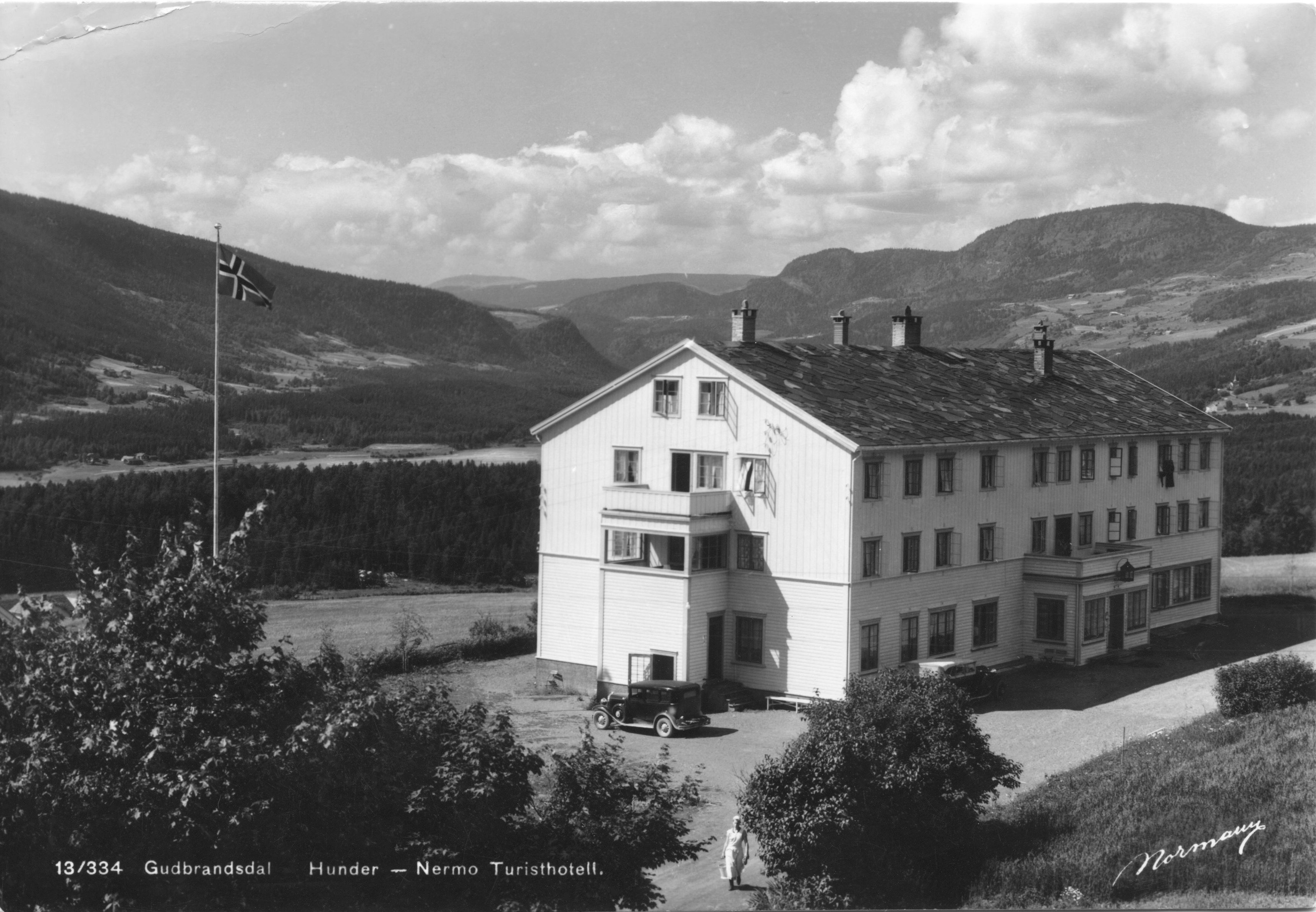
The history of Nermo Hotel: When Lillehammer took the world by storm
- Home
- About us
- The history of Nermo
The history of Nermo Hotel: When Lillehammer took the world by storm
On February 12, 1994, the whole world turned its attention to the small Norwegian town of Lillehammer. That's when the Olympic flame was lit in Lysgårdsbakken. Nermo Hotel is located just a stone's throw from the slalom slopes in Hafjell, and had at the time just completed the largest investment in the hotel's history.
After sixteen days of celebration, IOC President Juan Antonio Samaranch stood on stage during the closing ceremony and uttered the unforgettable words: "The best Olympic Winter Games ever."
For the hosts at Nermo Hotel, who had invested everything they owned in making the old hotel ready for the eyes of the world, this was a confirmation of their hard work. They had made the right bet, and won the Olympics as well.
The NOK 100 million decision
When Lillehammer was awarded the Olympics in 1988, the Nermo family made an important choice. The old wooden building from 1932 was in need of extensive upgrading. A new sprinkler system would alone cost four to five million. The experts recommended demolishing the old building and building a new one. But that was never an option for the family. The building from 1932 was the soul of Nermo, so it could not to be replaced.
Fortunately, Sparebanken Østlandet had faith. The bank booked the entire hotel during the Olympics, and paid in advance. This allowed the family to afford to carry out their plans: sprinkler systems on all floors. New colours on the walls. And a modern standard within the traditional timber.
In total, the family has invested more than NOK 100 million in Nermo after the Hafjell development. The largest investment in the hotel's history. But the alternative was never an option, because it would mean letting go of history.

Alberto Tomba in the barn
During the entire Winter Olympics, Nermo Hotel was fully booked, with new groups of guests arriving every three days. But it was not only in the main building that there was a buzz of activity.
In the months before the Olympics, the farm buildings at Nermo were emptied of everything that resembled farming. The barn was to become a service centre for the world's biggest ski brands. Fischer, Atomic, Salomon – everyone was assigned their own booth. But Rossignol, who had Alberto Tomba in their squad, did not settle for a booth. They took over an entire wing.
Up to 100 people worked in the barn during the Olympics. Skis were waxed and bindings adjusted around the clock. While the world's best alpine skiers whizzed down the slalom slope in Hafjell, their equipment was being prepared just a few hundred metres away.
The same barn that today houses modern hotel rooms and a large conference centre.

Regulars from all over Europe
Just south of Nermo Hotel, Hunderfossen became home to Scandinavia's only bobsleigh and toboggan track for the Olympics. The track attracted athletes from all over Europe, and Anne Gunn Nermo took on an unusual role: she became the hotel's contact person for the bobsleigh and toboggan community in Europe. Year after year, she attended a variety of events and gatherings to talk about Nermo and the track at Hunderfossen.
It worked. The Italian toboggan team has been staying at Nermo every single winter since 1995. One of the regulars is Armin Zöeggeler, the most successful toboggan athlete in history, with six World Championship gold medals and two Olympic gold medals. He has returned to Nermo every single year since 1992.
"The most important thing is not how many events we travel to," says Anne Gunn. "The best advertising is guests who return home and say that they were well taken care of."
"We wouldn't have stood a chance"
Today, over thirty years later, Johannes is clear about what the Olympics meant to Nermo.
"Without the Olympic Winter Games, Nermo would have looked very different," he says. "If we hadn't had the ski resort close by, we wouldn't have stood a chance."
But it's not just about the proximity to Hafjell. It's about the fact that the family dared to invest when the opportunity arose. That they chose to keep the old building rather than demolish it. That they saw the value in what already existed.
It was the same mindset that led them to receive their first guests in 1877. The same willingness to invest that drove the reconstruction after the fire in 1932.
Today, guests at Nermo can still stay in the building the family refused to demolish. Have breakfast in the restaurant where Norway's Olympic victories were celebrated. And take the gondola up to Hafjell, where the world's best alpinists still compete.